Showing posts with label Development. Show all posts
Showing posts with label Development. Show all posts
November 5, 2015
PuzzleGony
This is the first app I have developed in years as freelancer, a very simple game targeted for Apple Devices: Mac, iOS and Apple TV

October 29, 2013
Deferred Lighting: The backdoor, Part 2

In the first part of this article, we covered the a little theory of what this technique means as well as we set the foundations of code that started its execution on main. Now, the functional parts that are needed to create magic are going to be explained as follows.
When the Renderer class is allocated, also the constructor method is called, and here many preparations take place; in the following order: load each necessary CG shader, initialize the sphere lights (8) and place them across the heightmap, create the projection matrix and the root scene node to render objects, load the splash screen as a mesh, and set some configuration of the GCM. It is important to have considered the mesh "Sphere", this object will be the one in charge of draw into the scene the values of each light, in other words, the light will affect only on the area this sphere is colliding with, nothing else, process that differs from a ray tracing procedure. The code for what was explained before is here:
October 25, 2013
Deferred Lighting: The backdoor, Part 1

Today, I was asked about the theory behind the Deferred Lighting procedure, of which, to be honest, I was starting to forget (too much Functional programming lately); but what is well learned, is never forgotten.
The main idea behind this technique is to delay as much as possible the calculations of light over the objects on the scene, only those that deserve to be rendered will be performed, otherwise will be discarded. This also relies on "several" passes, which also means, the first time an scene is going to be rendered as normal: vertex positions, its normals and the material for each surface and instead of sending it to the screen it is transformed into a "texture" with information of the depth, normals and specular. This last texture becomes the input for the next step, where lighting takes place using the information from the variables from the previous phase. And then one "last" pass calculates all objects in the scene once again but this time it combines the color from the texture with the emissive and ambient light. The image below shows graphically how they are all added:
March 23, 2012
Deferred Lighting on PS3

After almost 4 weeks trying to work out Deferred lighting on the PS3, we did it!! Thanks to the help and knowledge of almighty Richard, we were able to render to multiple phases and output the results on a PS3, something quite similar to what is shown on the initial image.
But less words, more action:
March 19, 2012
MSc in Computer Game Engineering @ NCL

Hello Everyone!!
I know I've been far away from blogging in a long time, more precisely since September 9 2011, when today it's March 19, 2012. Before you get angrier with me, let me explain why I've been so faraway lately:
In late September I started master degree program in the United Kingdom, at the Newcastle University, then right now I'm studying MSc in Computer Game Engineering, where I've learnt so much about programming in C++, OpenGL, Maths for Graphics, Memory Management, even how to program for the PS3 using the Sony Official SDK, isn't it so exciting??
That's my main reason for being so distant from my blog, another was the overhear that was moving from México City to Newcastle Upon Tyne: baggages, computers, clothes and almost my entire life, however I forgot my tennis shoes back home.

September 9, 2011
11 Tips for Mobile Software Development

1. Track market shares.
It’s critical to keep up with trends in smartphone platforms, where the only constant is change. Sure, BlackBerry has long been synonymous with business, but it now lags both Android and Apple’s iOS in the race for market share, which affects what your company uses. In fact, Android is a case study in how quickly a platform’s fortunes can change: Between late 2009 and late 2010, Android’s market share grew 615 percent -- enough to leapfrog into first place, says analyst firm Canalys.
September 1, 2011
iPad + Kinnect = Augmented Reality

According to Apple this is the year of the iPhone 2, for many of us there is no doubt about it. However, the tablet is not the only technological character of our time, because it must share the stage with other products that are making a breakthrough regarding interactions with electronic devices. Augmented reality, the three dimensions and Kinect are other geek device working to be kings of the universe today. What if they all join in a single experiment?
August 15, 2011
Motorola Mobility

Dear MOTODEV member,
Today, Google and Motorola Mobility have announced their intention to enter an agreement under which Google will acquire Motorola Mobility. This is a positive step in Motorola Mobility's evolution and exciting news for the Android ecosystem.
As you know, Motorola Mobility has played a leading role in the advancement of the Android platform globally. With Google, we plan to continue to build upon our 80-year history of technology innovation and take Motorola Mobility's cutting-edge products and solutions to the next level.
May 20, 2011
C&P: Android Loves App Engine and the other way arround

Imagine this: you’ve spent the past few months hammering away at the latest mobile game sensation, Mystified Birds, and you are one level away from complete mastery. And then it happens. In a fit of excitement you throw your hands up, and along with them your Nexus S, which settles nicely at the bottom of the pool you happen to be relaxing next to. The phone is rendered useless. Luckily, your insurance policy covers the replacing the device and the Android Market handles replacing your apps. Unluckily though, all of your Mystified Birds data went the way of your device, leaving you to start from scratch.
May 4, 2011
Tegra goes Desktop

We have seen many products with Nvidia Tegra 2 along many devices (smart phones and tablets) from different brands and companies. Now, this chip will be used to run onto a "Desktop" computer, the super compact Trim Slice:

April 18, 2011
Let's dance with Sorting Algoritms
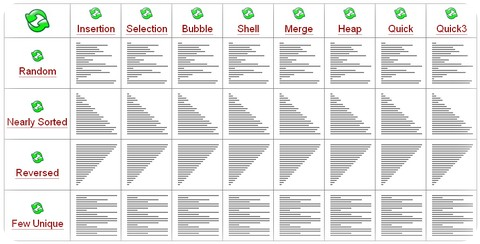
Sapientia University, in Romany, is responsible for this idea and production. The sort methods that are shown list the Bubble Sort (by Hungarian folk dance "Csángó"), the Shell Sort (by Hungarian folk dance "Székely), the Insert Sort (Hungarian dance only) and the Select Sort (by gypsy dance unspecified).
February 27, 2011
Android 3.0 SDK and Activations Since Begining

Android is such a promising Mobile Operative System, back guarded by the Open Handset Alliance (T-Mobile, Google, Motorola, Sony, between others) where the SDK of 3.0 Honeycomb will allow developers to create applications using the new API level and publish them in the Android Market.
As you developer can have of this release wil be:
- UI Builder ADT plugin improvements (improvements in zoom, design support, selection of sensitive action bars to manipulate properties of light, among others).
January 9, 2011
Mac App Store: Positive and Negative

One million downloads in just one day. This is the key sentence for the projected success of this new store launched by Apple. To give a view as objective as possible, I found few points to summarize what are the positive and negative aspects of this store:
December 10, 2010
More Cocoa Tips and Tricks

I been working on improving and adding functionality to Mittratter so that it will be available through the Mac App Store. Of course, in my path to developing it, I found more tutorial that could help others programmers out there:
November 27, 2010
Cocoa App Life Cicle

After this boring introduction, let's go to the matter of this post: How Cocoa Apps runs in MacOS X:
October 29, 2010
Suertudo: Your lucky App for iPhone/iPod
Well, after 1 month of development, programming and learning, the first version of Suertudo is out.
It has been sent to Apple for approval, meanwhile I will show you some of the key features presented within this app:
- Determine your luck at any point of time: pressing the red button or shaking the device.

It has been sent to Apple for approval, meanwhile I will show you some of the key features presented within this app:
- Determine your luck at any point of time: pressing the red button or shaking the device.

October 28, 2010
Objective C Valuable Links

Subscribe to:
Posts (Atom)